Last updated on April 15th, 2026 at 09:29 am
The soil stimulant that pays for itself
Increase your profit per acre by feeding the biology in your soil.
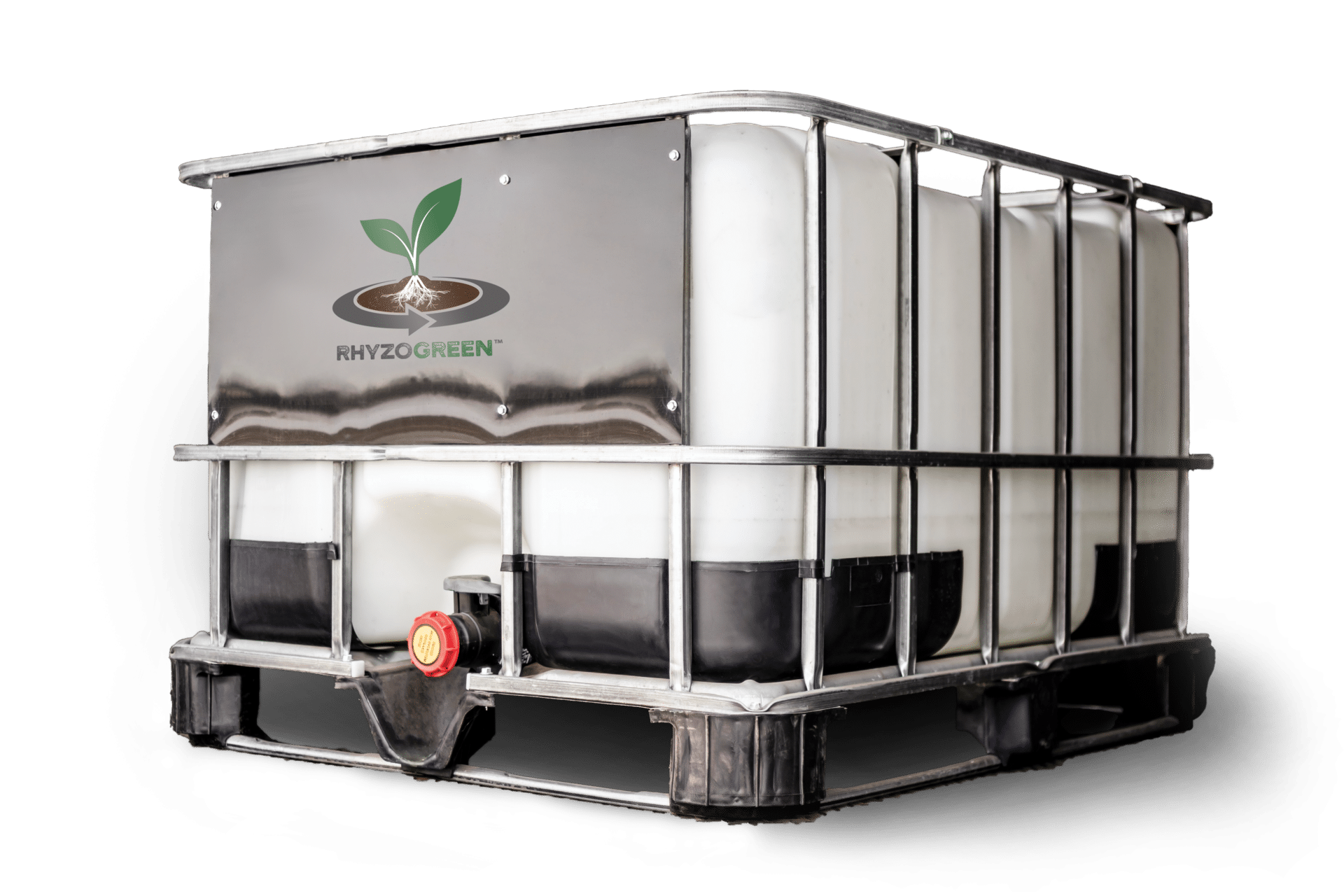
Available in 5, 40, 80, 135, & 270 gallon totes.
rhyzogreen
The Liquid blend of Superfoods to stimulate soil microbes
AVERAGE COST: $28.00/acre usd
BOOST SOIL BIOLOGY
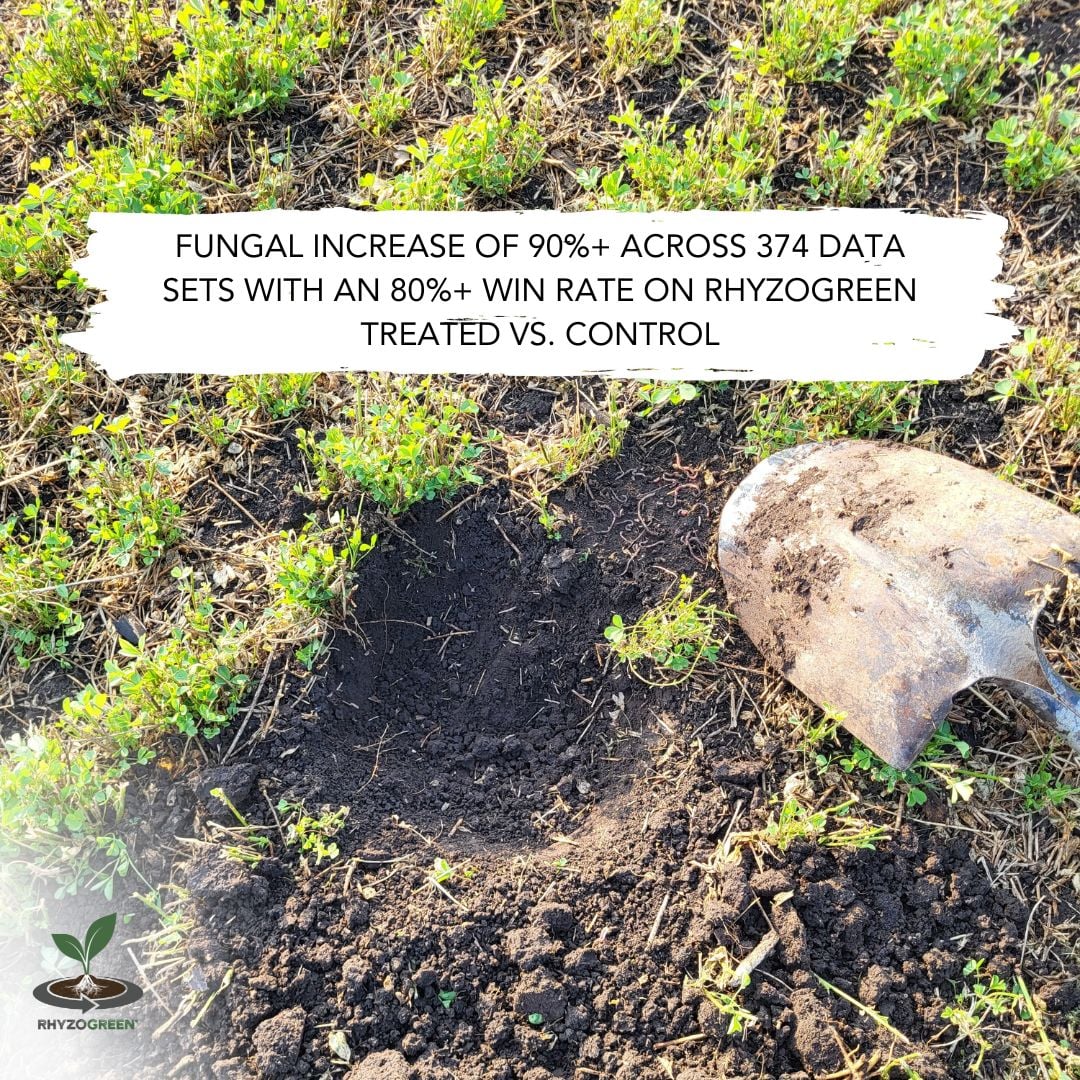
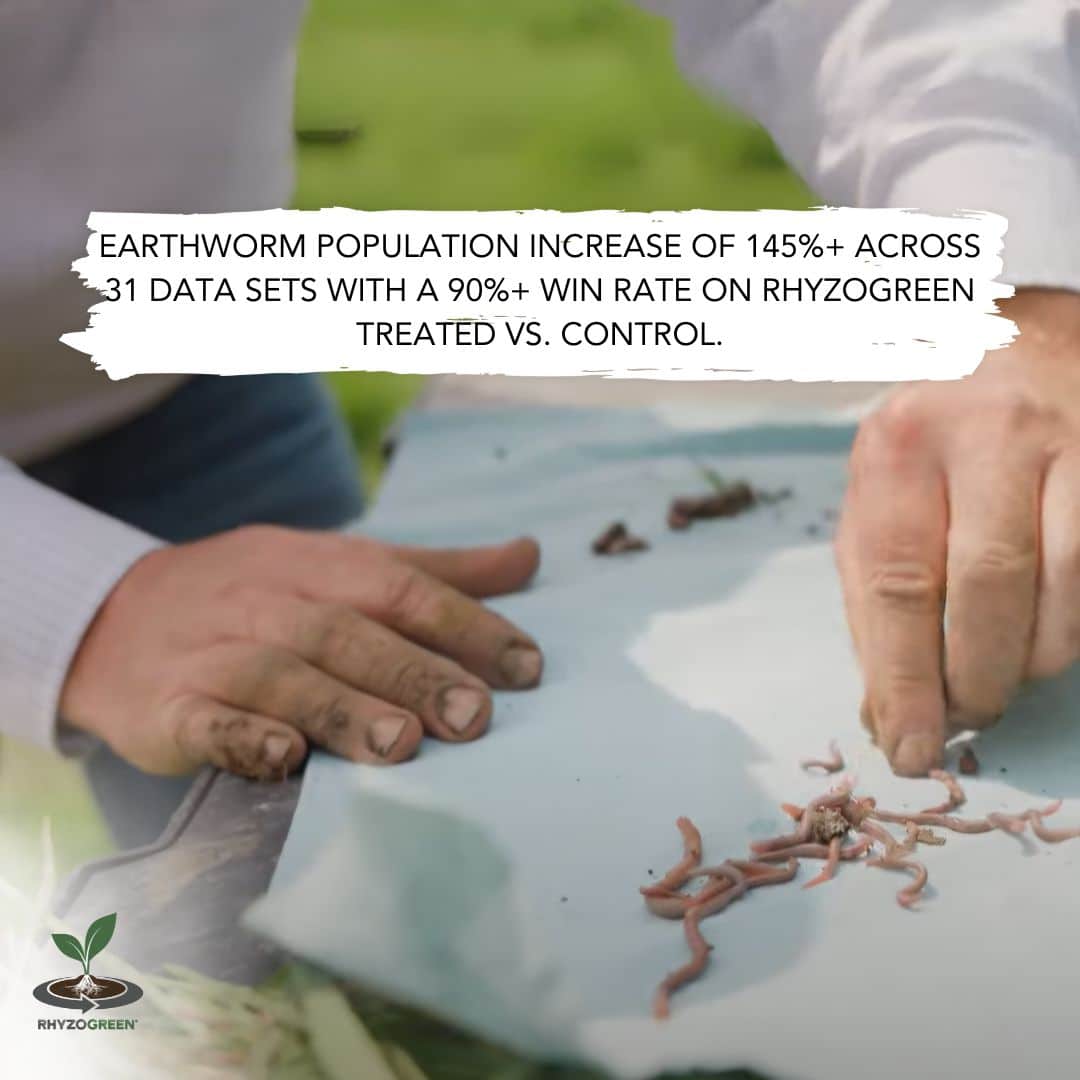
Rhyzogreen® is designed to be a direct food source for the soil microbial population. It stimulates the microbes, which can then do a better job of converting soil nutrients into a form plants can absorb and use.
When a soil's microbial community is stressed by poor growing conditions, such as soil compaction, excess moisture, or too little moisture, up to 80% of microbes can remain dormant or inactive.
It's important to note that Rhyzogreen® has shown better performance in marginal and sandy soils. Simply put, there's more room for improvement in these areas, so Rhyzogreen® makes a larger impact.
AID PLANT HEALTH
By hyper-activating the soil microbial communities and awakening dormant microbes, Rhyzogreen® unlocks and releases naturally occurring nutrients in the soil. This enables the plant to uptake more nutrients, and become healthier, stronger, and more resilient.
INCREASE YIELD
Whether it's for alfalfa, pasture improvement, hay meadows, or cropland, Rhyzogreen® naturally boosts yields. When a plant can uptake more nutrients, its root mass and emergence increases, ultimately impacting yield.
get more out of your fertilizer
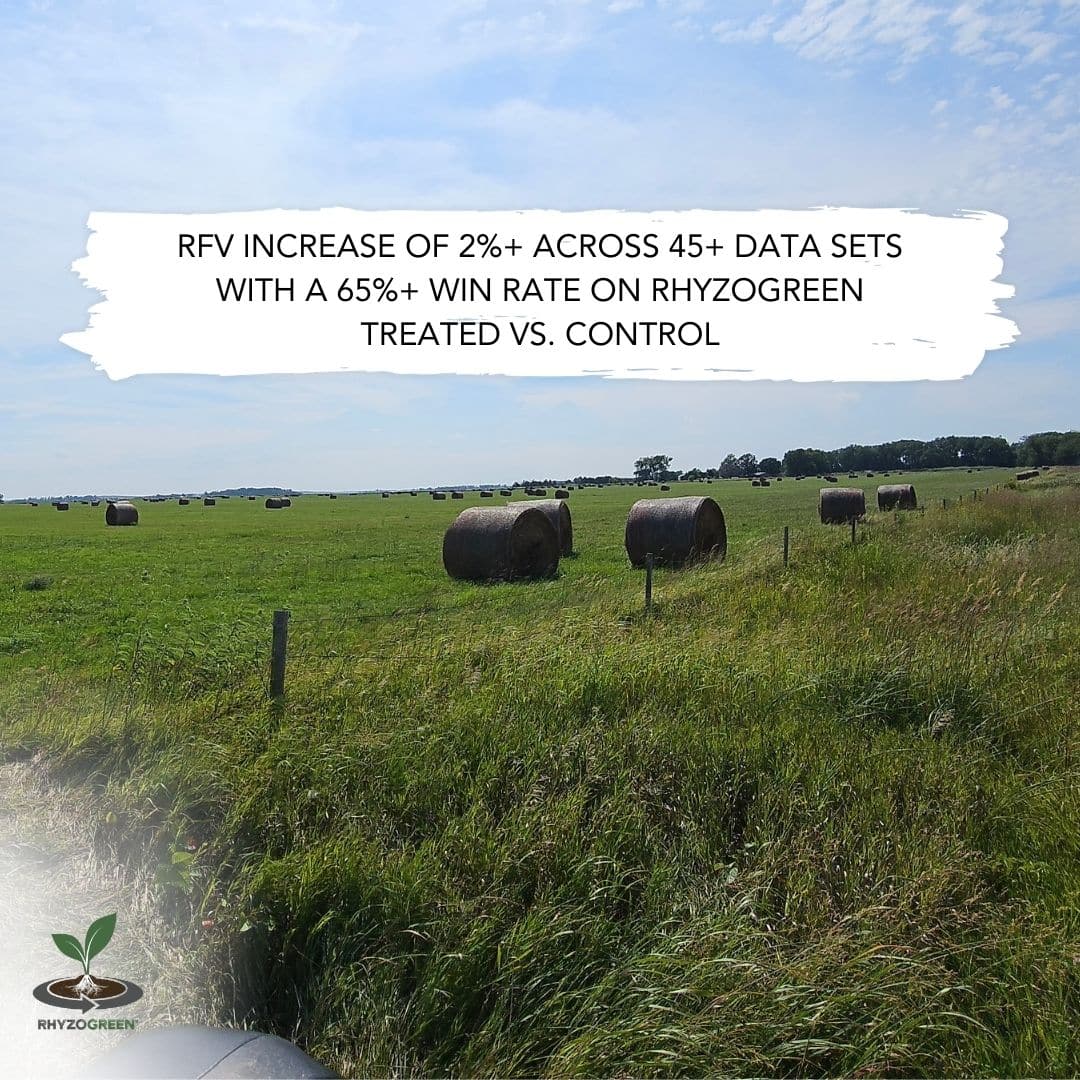
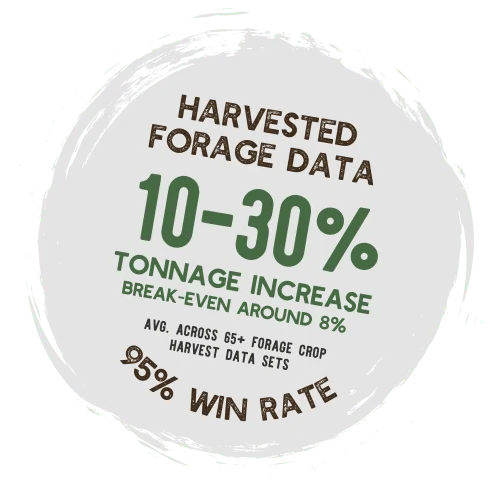
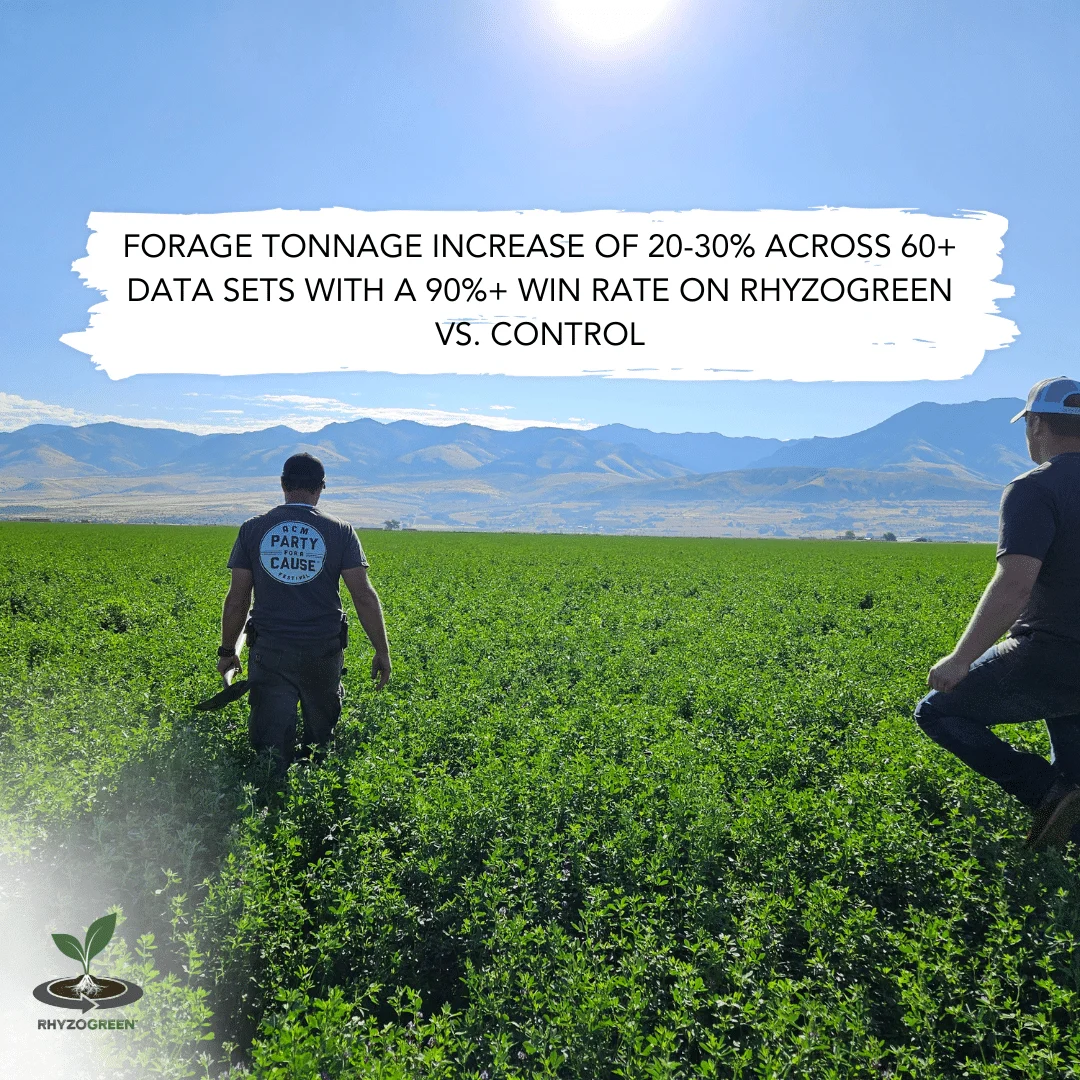
Increase hay/alfalfa production by 10-30%
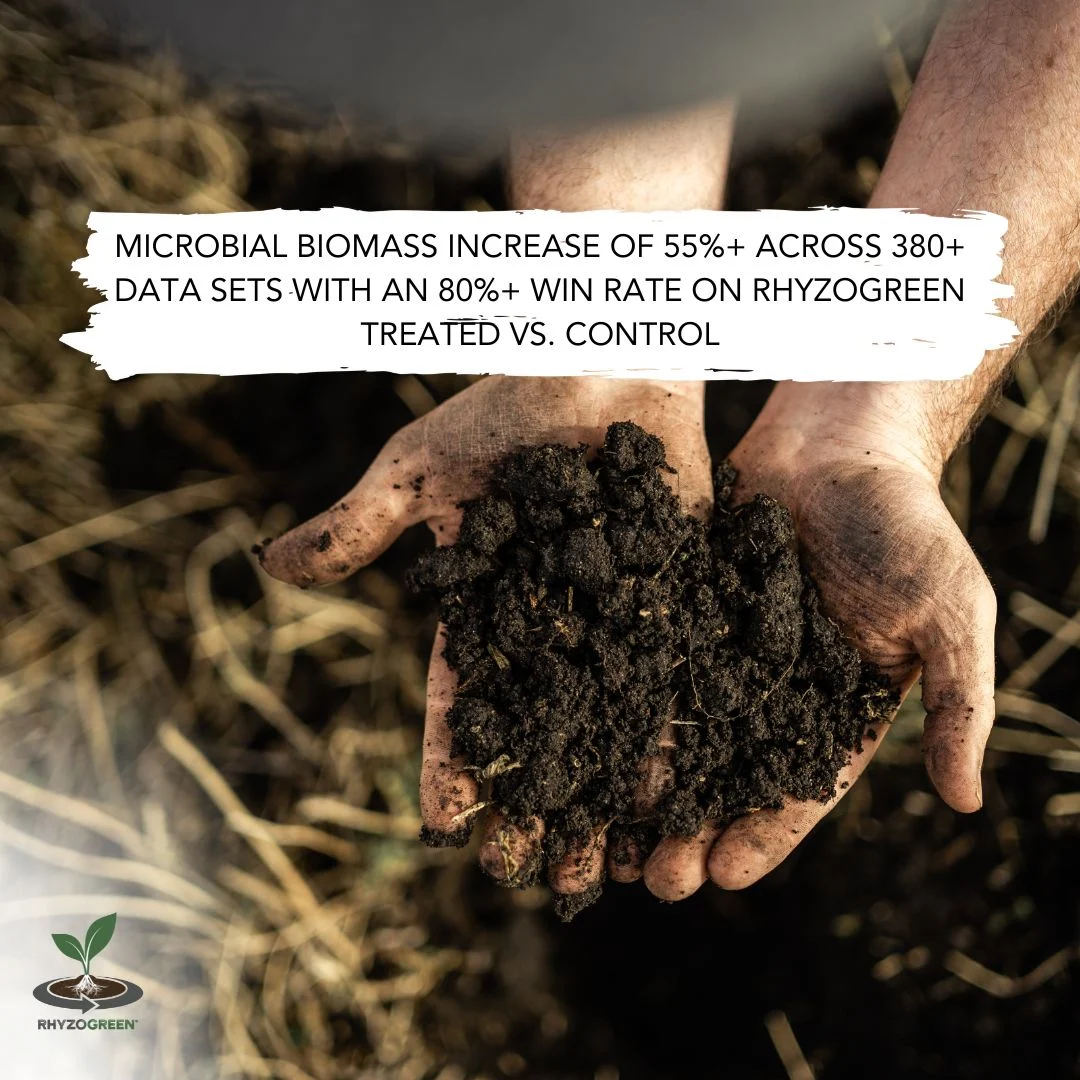
Boost soil microbial biomass by 58% (avg. across 356 trials)
Overview
So the mode of action of Rhyzogreen is it's applied to the leaf foliarly. It's very quickly translocated down into the roots, expressed out of the root tips into the rhizosphere or the root zone. That's where the magic happens. It feeds the microbes that are native to your soil. They then serve to unlock nutrients in the soil and make the plant available. It's really no different than feeding microbes in the rumen of a cow and unlocking or releasing nutrients and making a cow available. Wait, are you the tub that pays for itself? Well, how does it pay for itself? What the heck are we doing talking microbes here, Trevor? What even is a microbe? You know, it sounds like a fuzzy term, but yeah, Twain, it's a good point to loop it all in. Is The tub that pays for itself. And feed and forage savings alone. That's by feeding microbes. Now, rhizogreen is the same science, feeding microbes, the little living organisms in your soil and stimulating them. And we're on a quest to get to fifty percent ranch efficiency, and that is we call it q fifty. That is a journey we're on. We're chasing this goal, and it's really inspiring for us because we're doing it for ranchers to help drive profitability back to rural North America living at our purpose. If Rhyzogreen's gonna affect the the soil and the grass yields and quality and and fertility, then you get them to the cattle side in Riomax, you're also boosting efficiency on your cattle side. I mean, it's a win win. So it's kind of a no brainer why you wouldn't do both at the same time. Save feed, you produce more feed, and that's the the efficiency. Talking rhizogreen, what what is it? Fair question. It's proprietary, so I'm not gonna put, you know, every ingredient up on a billboard, because our family business holds that proprietary recipe. So I'll tell you what it's not. It's not a biological. A lot of folks, when they hear of a soil health product, they kinda tend to think biologicals. We're not here to knock biologicals. Biologicals are like when you're adding microbes to the soil. And the challenge we have there is the native communities, the soil microbe communities, don't always welcome strangers, much like a rural community wouldn't welcome a stranger just walking in. So what we're doing is we're feeding the microbes in your soil, the native microbes. We're not adding microbes. We're feeding and enhancing and awakening your native soil microbes. When you have stressed conditions, whether it's drought stress or compaction or overuse of chemicals or whatever, up to eighty percent of your soil your native soil microbes will be dormant. They're there. They're yours. They're alive, but they're not functioning. And so that's where Rhyzogreen has really shown huge uptick is by stimulating them, awakening them, fueling them, and the net result is you release nutrients, liberate nutrients, and you get more production in your in your plant. What we focus on is the ten to thirty percent increase in production that we see and that's over ninety percent win rate. So over ninety percent of the time, we're seeing an increase in actual production. That could be on pasture ground or it could be on hay ground. One thing guys do question or or is a concern is, am I gonna be lowering the nutrient value or the protein and energy content of that feed just because we're increasing how much there is? Yeah. And and that's a fair concern. I think it comes from the context of guys, you know, let's say Minnesota or Florida where you get a lot of moisture and you get fast growth and the grass is washy or the nutrients are diluted. That is not the case with Rhyzogreen. With Rhyzogreen, we're getting more tonnage or more production without sacrificing quality because think of it, the mode of action is those microbes are releasing nutrients. The nutrients are becoming plant available. So the the nutrients are transferring into the plant. So we're not short on energy or protein or your other naturally occurring, nutrients in the plant. In Nebraska twenty twenty five, a third party trial that we engaged in showed that on on corn silage, we saw a twenty four percent increase in nutrient value. And, that includes your energy, your protein. And so that that's a huge number. But at very least, we're not going backwards. You know? We're sacrificing the the nutrient value of the plant just because we're increasing production or tonnage. Hey. So we almost forgot to add this bit, but we've done a bunch of third party validation on Rhyzogreen. So we 've done tons ourselves, we've done tons with our customers and then people are saying well to trust it we really need third party validation. First of all what we've done ourselves is over a thousand data points on measuring soil health and and tonnage and production and worms and water infiltration all that. I don't think we need to do any more of that. Then we've done on farm trials with our customers it's not our data it's our customers data and we've done over sixty of those but in twenty twenty four, we started doing third party validation. We engaged a company called Agrellis, and they did Five trials for them in twenty twenty four, one in Idaho, Oklahoma, Texas, Oregon, and Washington. And across those five states, those five studies, they saw an average of twenty five percent yield increase. Then we engaged Agri Authority, a completely different third party verification body and they did a study for us in Nebraska and Arizona and they saw an increase in tonnage or production on their studies of thirteen point eight percent. Then, Agrellis went to work for us again in Nebraska measuring feed quality. So we've got plenty of data on tonnage. They went and measured feed quality. It was actually corn silage. And they measured, protein and energy and TDN. And the average increase in feed quality they saw saw on that, corn study was twenty four percent. So, that sums up the third party validation. It's kind of stuff we knew already, but it's good to have it. Let's hop back to the session. We talked earlier driving profitability back to rural North America. We gotta get the numbers and sense out of it. So if you, as a rancher, if you're looking at it, what whether you're talking hay ground, pasture, whatever you might be looking I was gonna say maybe do some math on on hay ground. It's a little simpler to Hundred percent. So if we just take some some rough numbers, if you're running, let's say, three ton to the acre right now on your hay ground per year, and your hay is worth roughly one hundred bucks a ton, we see between a ten and thirty percent increase in tonnage. So let's just take twenty percent increase as an average. So three ton to the acre, you have a twenty percent increase in tonnage, that's zero point six of a ton per acre, you're increasing your production per year. Point six of a ton valued at one hundred dollars a ton, that's about sixty dollars an acre in added hay production per year. Now the cost of rhizogreen is about thirty dollars an acre. So we often, you know, depending on what quantities you're buying, but we'll figure by the time you get it applied, it's probably gonna cost you about thirty five bucks an acre. No. Get it on the ground. So if you're thirty five dollars an acre, is it what it cost you? And you're making sixty in increased hay production. So sixty dollars minus your thirty five dollars of cost. You're coming out twenty five dollars an acre ahead year one, one application. That math answers to our purpose of driving profitability back to rural North America and doing it without sacrificing your the health of your land or the longevity or your your the resilience of your land. We got a lot of guys looking at it. Know, it's been a good year. The last couple of years have been pretty good in ranching, and they're looking at maybe some hay production that they they don't wanna put fertilizer on it every year. They're sick of fertilizer, in fact, and they feel like they've spent a pile of money and not seen a ton of results. I mean, fertilizer jumped real bad a few years ago and this was half the cost, so we went for it. Getting that land, that flywheel as you sometimes refer to it, back up and going, feeding those microbes, and on just that simple math, year one, you're paying for that. You're you're putting twenty five dollars an acre back in your pocket to look after that ground. It makes me feel good that we're putting good stuff back into the earth and trying to, you know, do things a little more natural. It's way cheaper than it was before, and we're getting more hay. You're getting paid to get that ground back producing. Does this mean, Duane, if I'm using Rhyzogreen, that I can quit fertilizer? I think we both know that you're the better one to answer that question. The answer is no. I can't sit here and tell you you can cut back on fertilizer. Many of our customers do. Some eliminate fertilizer. But you gotta understand also that there's nutrients in the soil are like a bank account, and we can help liberate it and and and get more out of those nutrients. But at some point, we may mine those nutrients or utilize them or use them up to the point where that bank account needs to be refilled. When you do need to replenish, we know we're running a more efficient system. Right? So that every dollar you spend on n p and k, you're getting the maximum out. Rhyzogreen will help you get more out of every fertilizer dollar. I'll say that again. Get more out of every fertilizer dollar. Because we're feeding that life, the life is unlocking the nutrients, the the the fertilizer, NPK, whatever, making it plant available. And then it comes full circle with a flywheel. You know, you work with mother nature and you set in motion a flywheel. And we've seen it on extended testing we've done over, like, multiple years and seen the long term effects of feeding microbes, and then the microbes keep nutrients cycling. And But to all of that, between so you're making money on it, but at the same time, you're investing in the in the health of your land. Who doesn't want that for the next year, the next decade, the next generation? That lights my fire. Who's it not a fit for? Yep. I'm I'm jelling up. The the question comes who who is Rhyzogreen not a fit for? Yeah. It's it's a good question because there's Rhyzogreen is not a fit for everyone. I think we might as well address it. Well, just like on the tubs, we always say if doesn't pay for itself on your operation, it probably doesn't have a spot there. So let's talk about that on Rhyzogreen. Yeah. So a couple of the key areas. One is if you got a real high or a real low pH in your soil, we've just found that to be a less effective spot for for Rhyzogreen. Yeah. The soil microbes are already sort of depressed or or suppressed, and so we don't see as much of a response. The the other one would be in a drought setting. So where you're really not applying it on a green leaf, the plant's already dead or dormant. That's not an ideal time to be applying Rhyzogreen. And the third one is, and it might surprise some folks, but row crops. So what we found over the last six years is what we do consistently is feed microbes, stimulate them, and help unlock nutrients in the soil, make them plant available. What that doesn't always mean in a row crop situation is increased bushels or increased yield. And so at the end of the day, we're focusing on improving profitability or driving profitability back to rural North America, we really aren't true to our purpose if we were to stand here and say it pays for itself all the time on row crops. There's a lot of times when if we don't increase the the yield, it's not it's not a no brainer. And that's where with forage crops, with our ninety plus percent win rate, we know for a fact, Rhyzogreen is paying for itself majority of the time, and it's it's a win for the for the rancher. And and just to don't get me wrong. There are row crop farmers that use it, you know, corn or soybeans. And have seen good results. And and and they may be chasing soil health or water infiltration or just investing in their land. Absolutely. But like Twain said, to to really measure it and look at the return, we're like forage crops, baby. Ranching, you know, that could be alfalfa, hay alfalfa mix, pasture ground, cover crops, silage, anything that's gonna go in that cow's mouth, we're increasing the tonnage, increasing the production, and also increasing the soil production capacity. And where guys might use it with pasture is if they're like a calving pasture somewhere they've hit pretty hard, or lower production areas in a pasture. We've had guys do like almost spot spray it where some there's an area where they feel like needs a bit of a pick me up or guys will even look at staggering it. So they'll do part of the ranch, you know, over a three year period. So they'll do part one year, next part the next year, the next part the third year. So they're not applying Rhyzogreen to their whole ranch every year. Certainly could, but financially, to be able to split it up and break those costs up over a few years makes a a big difference. But the take home message is if you're increasing the production capacity of your land and you're increasing the health of your soil, that is a great thing to do not only for this year, but for next year and next decade, next generation. The last place I would say it's not a fit for the guys that should not, should not, should not use it. Guys that shouldn't use it. As if a guy's not gonna measure it, you know, that's That's true. You had a a sort of a one liner on measuring. Oh, yeah. I had an old boy I used to work with in Georgia and one of the things he told me always was, you can't make what you can't measure because you'll never know when you've made it. Bit of a tongue twister, but I think it you were saying earlier, you know, even if a guy just throws a tarp down, stakes it down, and sprays over it, at least you have a patch you didn't apply ryzogreen to you can measure again. So don't overcomplicate it, but give yourself the ability to make a good decision out of this. When you use it, make sure you give yourself a comparison. There was that one guy in Texas, and he he they said dad was so excited about Rhyzogreen that he applied it to the all the all the acres they had. Well, at the end of the year, they they didn't have any comparison, and they couldn't make a good sound decision for themselves. So we'd recommend, you know, having a comparison. So if you've got this far, you're probably wondering how do I use this? How do I apply it? Twin? Yeah. So one one of the most common ways and probably the best way guys are applying it is with a ground rig. So be at a four wheeler sprayer or commercial sprayer, whatever you're using. Rhyzogreen is applied foliarly. And just apply it fully fuller foliarly. I still can't say that word. On the green leaf as far as that. So you wanna get it on the leaf of the plant. As Trevor mentioned earlier, it gets absorbed through the leaf. The one that's a big no is flood irrigation because you're not getting it on the leaf. It's hard to say where all the rhizogreen's getting. It's one gallon per five acres. So one gallon of rhizogreen per five acres, and we recommend it's mixed with between five and twenty five gallons of water per acre. And so what we've seen is with a drone, sometimes it's less, you know, than five gallons of water per acre. Think you can get two or three gallons of Yeah. And a pivot can get quite a bit more than that. So it's not that those methods are bad. It's just you're not quite at the right dilution rate. So in the wrong setting, the results might not be quite as effective if you can get it with a ground rig. But if you can't and, you know, aerial is your best method of application, no worries. Got lots of guys doing that and seeing good results. We got all the way from thirteen hundred and fifty acre tote down to cases. The biggest one's a thirteen hundred and fifty acre tote, six hundred and seventy five acre tote, four hundred acre tote, two hundred acre tote, and then actually now available through our dealers is twenty five acre cases. So pricing follows. It's the cheapest if you buy it in a big tote, you know, so we got guys, you know, maybe you don't run thirteen hundred and fifty acres, but between you and your neighbor, you got enough acres, they'll maybe split a tote. And it's lower cost because you got less packaging. Saves you a fair bit. So it's four bucks an acre off. It's twenty six dollars an acre in a big tote all the way to thirty dollars an acre in cases. For the cases, they are available through our dealer network. So for a lot of guys, it's an easy way. Say if you wanna do two or two hundred acres, you know, as a bit of a trial, you got a few different fields you wanna experiment with, they can go in, grab eight cases, and it's easy to to get applied. And what we find is guys might start with two hundred acres, like what they see, and then buy it in tote sizes there on out because it's more cost effective. The easiest way to get ahold of some would be just to give us a call. As a company, out. As of now, there's some dealers that are stocking it, some that don't quite have it yet. So give us a shout. We'll hook you up with a local dealer that's that's gonna have it in stock or we'll ship it directly to you, make sure we we get you taken care of. The main thing is as you get started is to do it right and and make sure you have a comparison. There should be a contact form somewhere around this this video, but also jump on our website, riomax dot net. You can fill out the chat and and get ahold of us that way. Otherwise, the best way, just give us a call. That's the best way. The main number, it's eight eight eight five zero seven zero one two two. And As a family business, we'd love to talk to you. Just talk to a real person. You won't be talking to a computer. Talk to a real person, and let's see if this is a fit for you. Alright. Your finger's bleeding? Holy cow.
Rhyzogreen® is a direct food source for the soil microbial population, designed to impact root structure, plant health, and ultimately yield.
Soil health directly correlates to plant health. There is an enormous amount of nutrients in the soil, but only a small percentage is actually in a form that the plant can take up.
Soil microbes convert soil nutrients into a form the plant can absorb and use. But, if a soil's microbial community is stressed by poor growing conditions like soil compaction, excess moisture, or not enough moisture, up to 80% of microbes can remain dormant or inactive!
That's why Rhyzogreen® is designed to hyper-activate the microbes in the soil, so they can do a better job of unlocking those nutrients that are already existing in your soil.
It's important to note that Rhyzogreen® has shown better performance in marginal and sandy soils. Simply put, there's more room for improvement in these areas, so Rhyzogreen® makes a larger impact.
How it works
Container Options
Rhyzogreen comes in 80-gallon, 135-gallon and 270-gallon totes. You'll need approximately 1 gallon for every 5 acres.

Cost
Rhyzogreen® costs approximately $30 USD per acre, but this varies with quantity discounts, promos, and passes required.
Shipping is free.
Calculate how much you'll need and approximate cost using the calculator below.
Application Instructions
Typically, you'll need 1/5 of a gallon per acre; another way to look at that is 1 gallon for every 5 acres. Consult the product label or your Rhyzogreen® rep for more specific details.
Blend recommended amounts of Rhyzogreen® with 5-25 gallons of water per acre for foliar application or a minimum of 2 gallons of water per acre for in-furrow application. For best results, foliar applications should be made in the morning hours when the air is cool.
Alfalfa - 1 gallon per 5 acres. Foliar - Early spring after greenup and between cuttings after plants have started showing a minimum of 2"-3" of regrowth.
Grazing Pastures - 1 gallon per 5 acres. Foliar - Early spring after greenup. For best performance repeat application every 90 days during active growing season.
Small Grain - 1 gallon per 5 acres. Foliar - No earlier than 3 leaf stage.
Corn & Sunflowers - 1 gallon per 5 acres. In-furrow or foliar - No earlier than 3 leaf stage.
Potatoes - 1 gallon per 5 acres. In-furrow or foliar twice a year.
Soybeans - 1 gallon per 5 acres. In-furrow or foliar - No earlier than second trifoliate stage.
Sugar Beets - 1 gallon per 5 acres. In-furrow application - Apply 1 gallon per 5 acres with minimum 2 gallons of water. Foliar application - Apply 1 gallon per 5 acres on first pass as soon as possible after 4 leaf stage.
Yard Grass Receiving Continuous Mowing - 2 gallons per 5 acres. Foliar - Early spring after greenup. For best performance repeat application every 30 days during active growing season.
Vegetables - 2 gallons per 5 acres. Foliar - At 20 to 30-day intervals throughout growing season. For hand spraying mix 2-4 oz per gallon of water.
Fruit Trees - 2 gallons per 5 acres. Foliar - 3 times per crop cycle - Before flowering, early fruit stage and mid fruit stage.
Steps of the Cycle
mineral masterclass: Enhancing Cattle Performance at a Profit
A live webinar exclusively available to Riomax® dealers and Superior Livestock reps.
june 20, 2023
6:00 - 7:30pm PST | 7:00 - 8:30pm MST | 8:00 - 9:30pm CST
Meet the keynote speaker, Dr. Jeffery Hall!
Dr. Hall, who we know as "The Mineral Guru", is professor of toxicology, veterinary diagnostics, and mineral nutrition in the Department of Animal, Veterinary and Dairy Sciences at Utah State University. The thing we love about him is that he does not put a spin on anything that is tied to any one brand, his message is based on the facts of science.
Joined by the panelists:
Trevor Greenfield
Owner & Founder, Acting as moderator
Redwood Falls, MN
Matt Thompson
Riomax® Dealer & Superior Livestock Rep
Shelley, ID
1.5-HOUR DISCUSSION
enhancing cattle performance at a profit
Get an in-depth education, in layman's terms, of the importance of quality minerals and how a sound mineral program is predictive of feedyard performance.
Predictive Performance Value add program offical launch
Learn how this program gives confidence for the feedyard, credibility for the Superior Livestock Rep, and an extra premium for the rancher!
QUESTIONS & ANSWERS
Ask any questions you may have about Riomax® minerals or the Predictive Performance value add program and get on the spot answers from the mineral expert, Dr. Hall!
WHAT DO PAST ATTENDEES SAY?
"Thank you for inviting me to these webinars. The information is great, the speakers are great, and it's packed full of useful content. Keep up the great work."
"Love these forums. This is a nice way to keep up on all things Rio and cattle."
"I enjoyed hearing from other ranchers; their successes and challenges."
Expensive Inputs & Poor Soil Health don't make you money, do they?
What if you could stimulate the soil biology you already have... to release more of the nutrients you already have? Optimize what you already have to take back control of your profitability and leave the land better than you found it.
get more out of what you've already got.
Increase Tonnage by 10-30%
Stimulate your soil biology to aid plant health, build resiliency, and increase production!
Improve Your Fertilizer ROI
Unlock existing nutrients in the soil & get more from the fertilizer you do apply.
Boost Profits
Get more out of your existing acres & become profitable for today, and for the next generation.
3 steps to get started
Talk with a soil health guide
Help us understand your farming/ranching challenges and discuss ways to help you get more out of every acre.
Get rhyzogreen® with free delivery to your farm or ranch
Figure out how many acres you want to cover and place your order - either direct at 888.507.0122 or with your Rhyzogreen® dealer if there is one near you.
connecting the dots between soil health and increased profit per acre
Enjoy the financial benefits today, and the soil health benefits next season, next year, and next generation!

TALK WITH A SOIL HEALTH GUIDE
Help us understand your farming/ranching challenges and discuss ways to help you get more out of every acre.

GET RHYZOGREEN® WITH FREE DELIVERY TO YOUR FARM OR RANCH
Figure out how many acres you want to cover and place your order - either direct at 888.507.0122 or with your Rhyzogreen® dealer if there is one near you.

CONNECTING THE DOTS BETWEEN SOIL HEALTH AND INCREASED PROFIT PER ACRE
Enjoy the financial benefits today, and the soil health benefits next season, next year, and next generation!
Will you leave money on the table this season?
It sucks to take a beating from mother nature, the increasing cost of production, and uncertain markets to boot. It's time to hold on to your fair share.