



Producing Top Genetics on Bottom End Pastures
Christensen Genetics Has Carved A Niche With Genetics And Technology
SETH CHRISTENSEN

Lonoke, Arkansas

No matter where you are in the cattle business, it can be tough to make a profit. While things are pretty shiny now, the cycle will inevitably turn.
Seth Christensen knew that when he kicked his last dirt clod and became a first-generation beef producer. With a degree in economics from Utah State University and a burning desire to make his mark in the cattle business, he hitched his wagon to the star of technology and hasn’t looked back.
“My dad and my grandpa are both involved in agriculture, but on the crop side,” Christensen says. They have no interest in cattle. “So for me to get into cattle, I had to do my own thing and it had to be something that sold at a significant enough premium that we could afford to buy our own dirt, our own equipment, our own buildings, our own cattle, our own everything. To do that, we needed to sell at a higher value than what commodity cattle do.”
That’s why Christensen focused his business model around genetic improvement and technology.
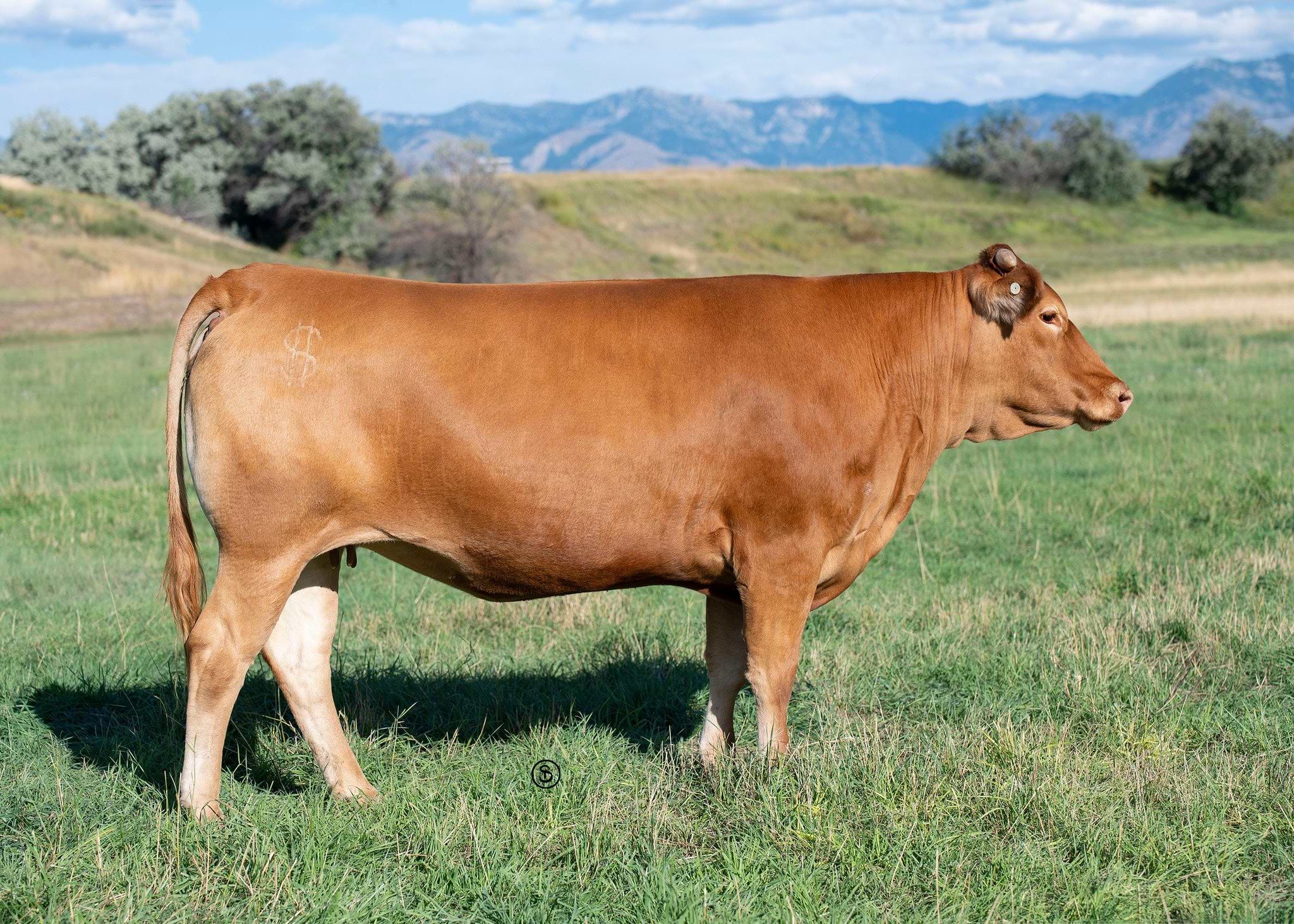
“Our business centers around embryo technology,” he says, initially focusing on Angus genetics. In 2018, however, he looked at other breeds and found a market for Akaushi. “From that point until now, we’ve transitioned from being almost entirely registered black Angus to the bulk of our embryo transfer program being 90% Akaushi, which is red Wagyu.”
The bulk of his business is selling confirmed embryo transfer pregnancies. “The person receiving the product is getting an average Angus cow, but the baby in the belly is the product of embryo transfer, in most cases a fullblood Akaushi heifer calf,” he says.
Beyond that, he leases fullblood Akaushi bulls produced by his embryo transfer program to customers to produce percentage Akaushi calves. In addition, the top end of his bull battery stand at several bull studs. The third source of revenue is direct sales of frozen semen and frozen embryos.
All the bills at Christensen Genetics get paid by cow money or they don’t get paid at all, he says. “So that’s about what is marketable within our program. And as we brought those Akaushi to market, we were selling them faster than we could produce them.”
Selection Criteria
Technology without a healthy dose of common sense can lead to following a rabbit trail to disaster. To that end, Christensen developed six metrics in priority order that guide his selection decisions.
Number one is docility. “I do not care how good they are. It takes a lot of cows to pay for a hospital bill. If she’s going to eat me or my kids, she can go on to further employment at McDonalds.”
Number two is fertility. “This is one of those areas that’s really easy to get out of balance on, with so much focus across multiple breeds on end product merit or on feedlot performance. We can lose sight of what makes a cow a cow function and makes it reproduce.”
Number three is calving ease. “I don’t have time to monkey with pulling calves. My clients don’t have time to monkey with pulling calves. So calving ease is a must for us and our clients. It’s a zero-tolerance policy.”
Number four is growth. “They have to wean at an acceptable figure. The more performance, the better, as long as we’re not giving up docility, fertility and calving ease to get it.”
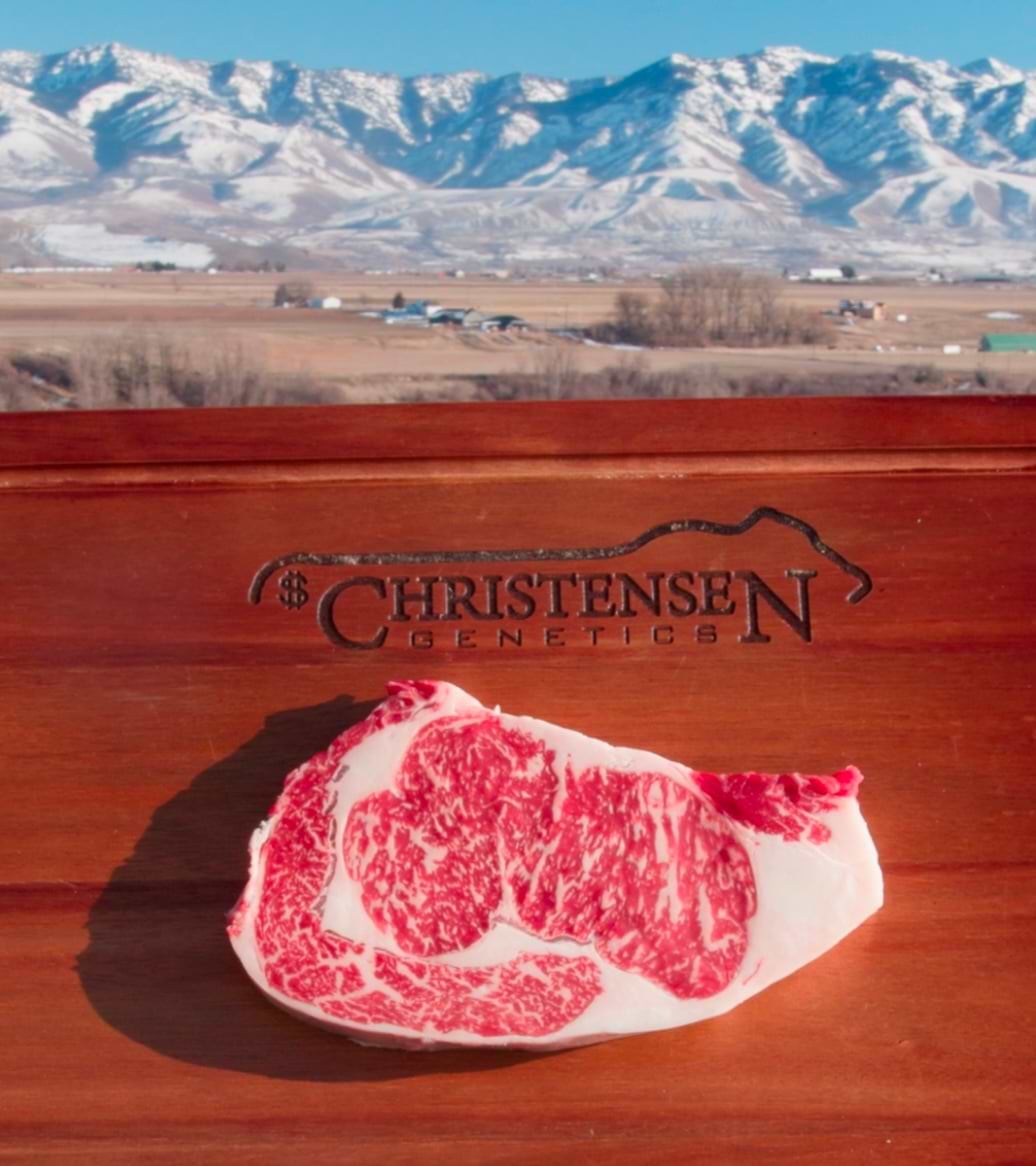
Number five is marbling. “We want to put as much marbling in that steak as we possibly can. And Wagyu are renowned for their marbling ability. “A lot of my clients are selling direct-to-consumer beef. It they tell somebody that this is a Wagyu steak, they’re not expecting a Walmart steak.”
Number six is longevity. “The more years we can get out of that cow for that initial replacement expense, the better the rate of return is. If you can cut your depreciation cost in half, which you can do if you get an animal that will run into its teens instead of being done at six years old, that’s a completely different proposition.”
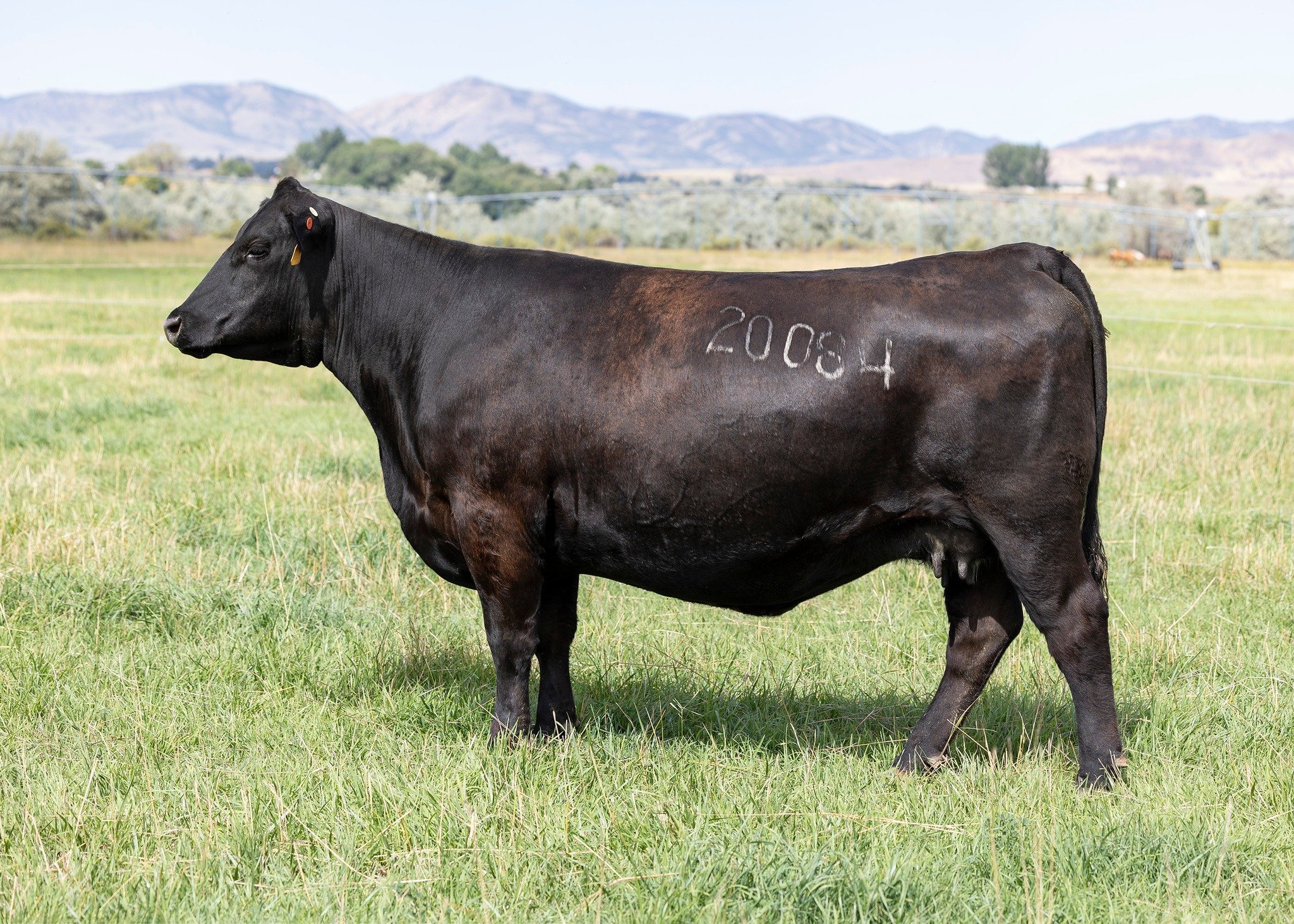
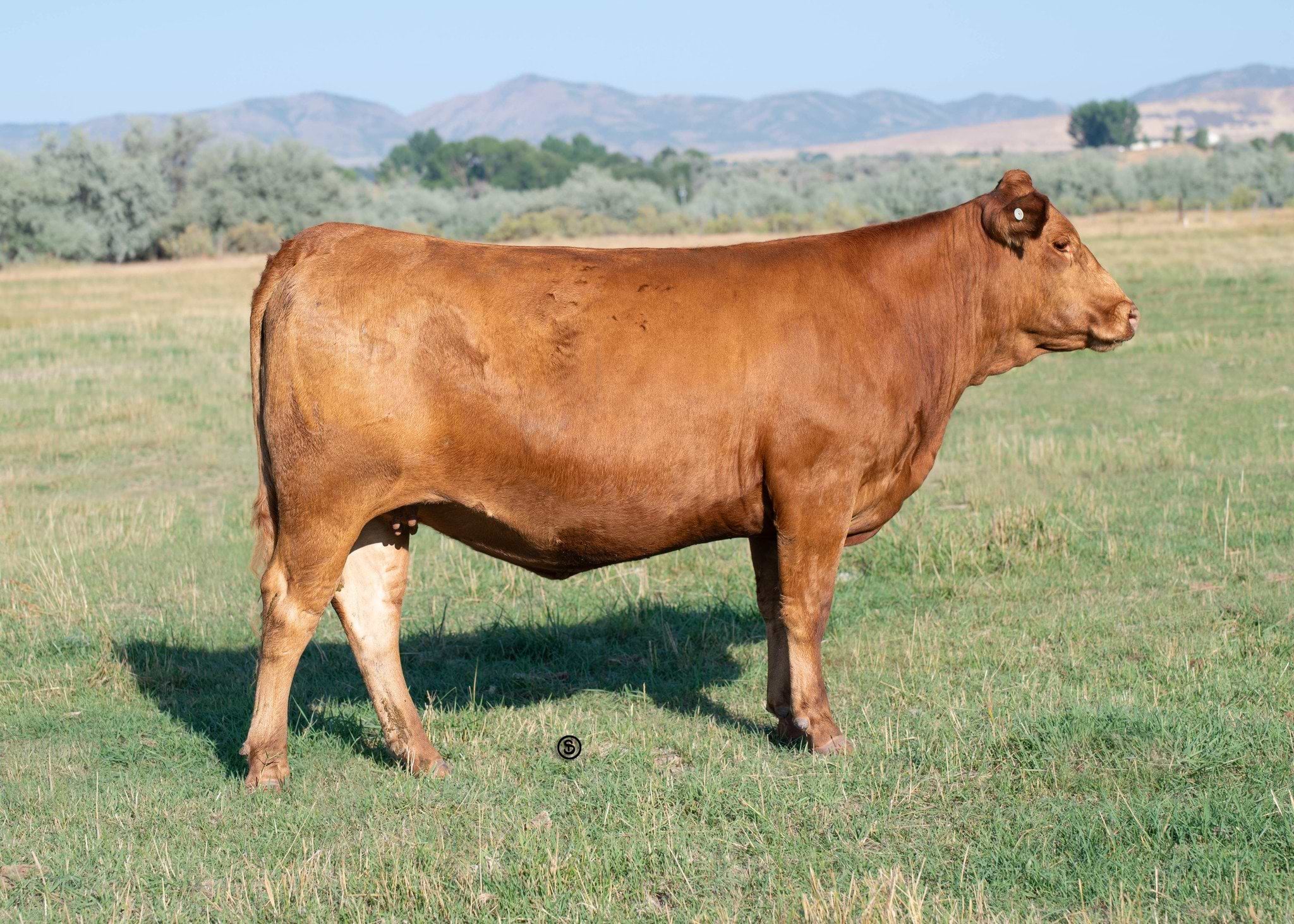
How ET Works
Embryo transfer is exactly that, taking embryos from a genetically superior donor cow, artificially inseminating those embryos with a genetically superior bull, and placing the fertilized embryos in a surrogate recipient cow. “So the cows carrying the calves have no genetic relationship to the calves being born,” he says.
“Looking at it from a genetic improvement standpoint, we can only accelerate improvement on the top side of the pedigree through the purchase of a really, really nice bull and turning him out,” he says.
“We’re controlling both the top and bottom side of every pedigree by using only the top 5% of the cows as donors. The other 95% are carrying their calves. So if you think of your whole calf crop being out of the top 5% of your cows, that’s essentially what we’re getting every year with embryo transfer.”
With embryo transfer, multiple embryos can be flushed from the uterus. The average is six embryos per flush, Christensen says, but that varies widely. Sometimes he doesn’t get any and he’s gotten 35 embryos at the top end.
There are two ways to obtain a fertilized embryo. One is in vivo, where an embryo is produced, fertilized and carried by the donor cow for seven days before being flushed out and placed in a recipient cow.
The second is called in vitro technology. There, unfertilized egg cells are taken from the donor cow and grown in a laboratory for seven days, then fertilized and placed in donor cows. That process can be repeated every week or biweekly, depending on technologies used.
Christensen ships the recipient cows to his customers, who calve them out and keep the pair.
How Riomax Technology Improves The Odds
While the donor cow has no relationship to the genetics of the embryo she’s carrying, that doesn’t mean she doesn’t influence the genetic expression of the calf. Enter epigenetics and fetal programming, where the uterine environment can turn on or turn off certain genes.
That’s one area where Christensen sees the value of Riomax.
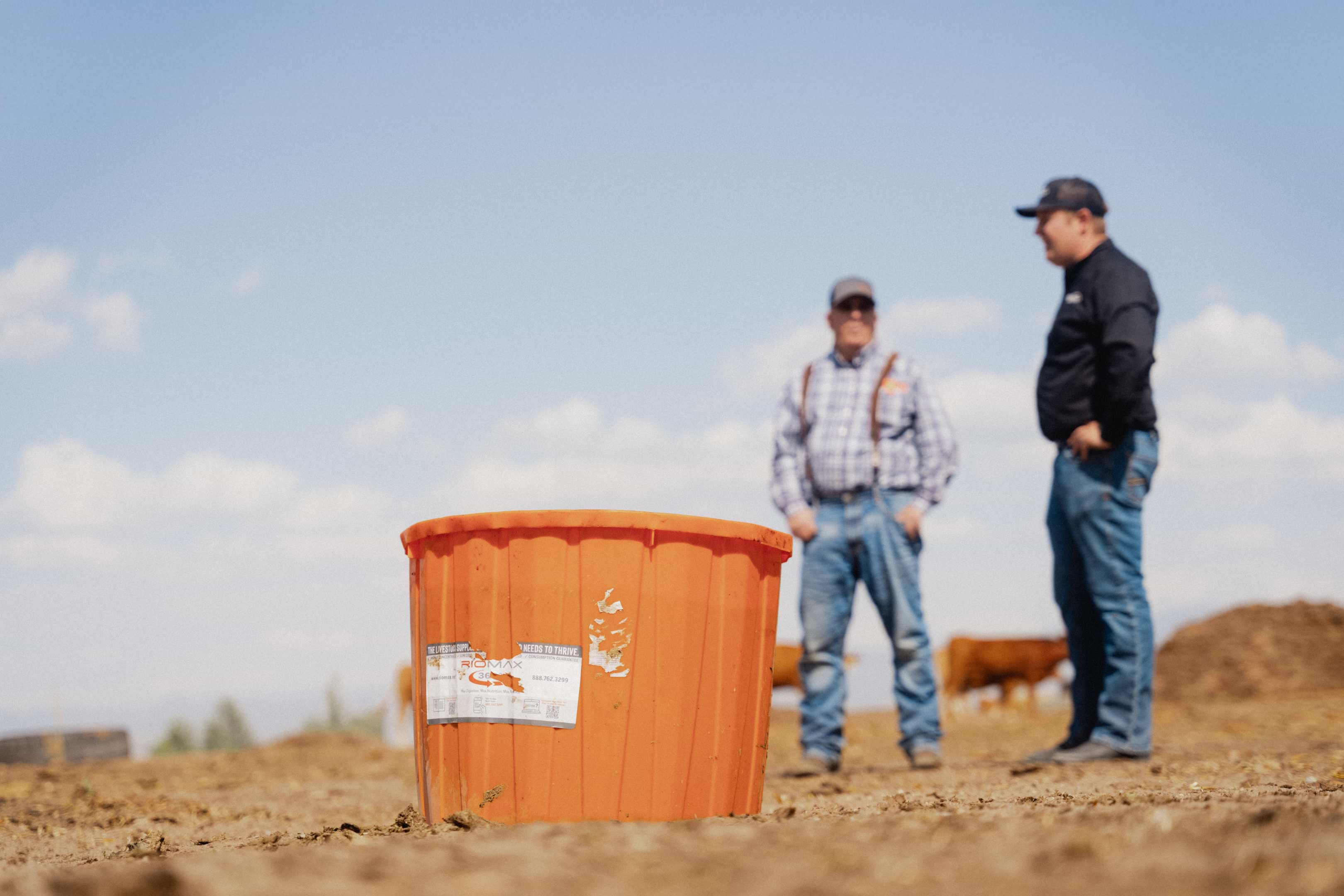
What attracted him to the orange tubs years ago wasn’t a salesman. He’s had lots of salesmen stop in, selling lots of different vitamin and mineral tubs. Instead, it was the testimony of neighbors and customers, people who had nothing to gain by sharing their experiences with Riomax. “So we went ahead and tried it.”
For Christensen, a self-described math nerd, it came down to rate of consumption. “I love Riomax. We’ve used it for years,” he says, “and the only day I hate it is the day I buy it. But the math works if the consumption is in line.” If it isn’t, the folks at Riomax will make it right.
Christensen never needed that consumption guarantee. He bought a year’s worth, based on the roughly 400 cows he runs. He thought he’d be doing pretty good to be within a month or two of when the semis arrived with the next order.
In fact, the trucks pulled into the headquarters a week after the cows licked the last of the Riomax. “And that made the math work. I can stomach the per-tub price because it is consumed as advertised, which makes my per-head-per-day price the same or less than the cheaper tubs, and it’s a better product.”
Given that he can’t sell an unfertilized embryo, conception rate is the top metric for what makes him money. If an embryo doesn’t take, his cost per service is extremely high with embryo transfer.
He’s made other management changes since he switched to Riomax, so it’s hard for him to separate what caused what. “But I can tell you for sure that we have logged our highest conception rates we’ve ever had since switching to Rio. We’ve logged our highest weaning weights.”


Beyond that, he appreciates the labor savings the orange tubs provide. With the lower consumption rate, not having to replace the tubs as often saves a lot of time and labor.
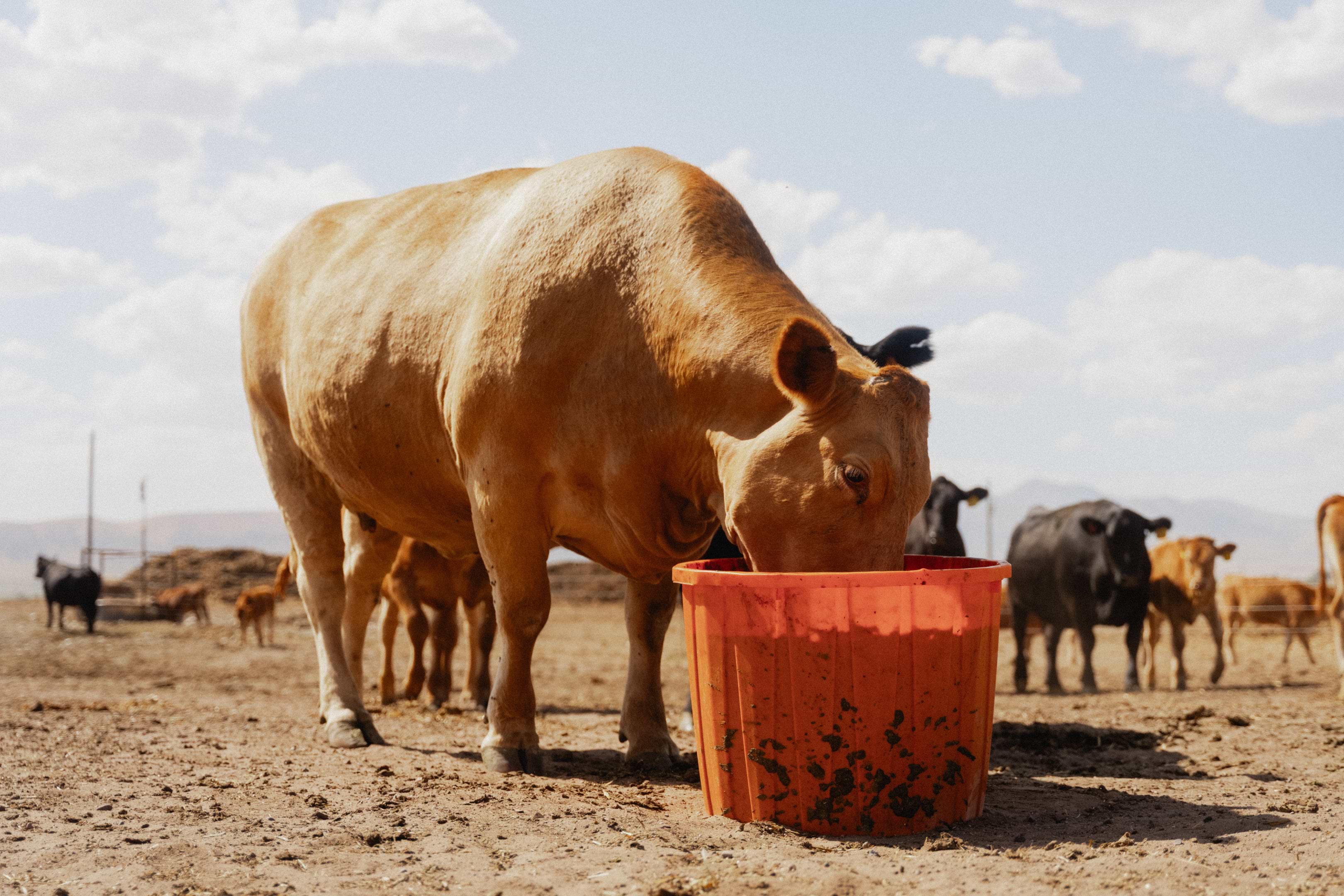
Then there’s the cows. Christensen Genetics is located in southeast Idaho, near the town of Weston. It’s high desert country that sees about 14 inches of precipitation on average. “So some of the pastures we graze on are pretty poor, kind of dirt, rocks and sagebrush pastures,” he says.
“To be able to utilize some of those dry feedstuffs, some of that dry, yellow grass and still maintain the flesh like they do and stay slicked off like they do and look like they do, (the word is) content as far as how well those cows do.”
Then there’s the fetal programming thing creeping in. Cows carrying expensive, high-end genetics need good nutrition to do right by the embryo. That’s tough on poor pastures. “If we can make sure that the baby coming out is set up for success, and that she carries it through to term and delivers a live, healthy calf with the best possible chance for expressing its genetic potential, we’re ahead of the game,” he says.
“So I don’t care if it’s the phase of the moon or what kind of feed or whatever it is. I don’t dare change a thing when it all comes together, including that Rio is part of the program.”