
Last updated on July 17th, 2026 at 12:15 pm
Riomax 360° Ranch Resource
Create a Drought Plan in 7 Steps
A practical planning tool for ranching operations. Fill it out step by step & download at the end.
www.riomax.net | 888.762.3299

Step 1 of 7
Draft Your Team
Begin your drought planning by forming a group of advisors and mentors. Involve family members, your banker, your insurance broker, and folks with knowledge of range management, business, and marketing.
Team Members & Advisors

Step 2 of 7
Nail Down a Ranch Vision & Strategic Objectives
It's good to have an idea of where the business is headed — and what succession might look like. That's the vision. Strategic objectives are how you're going to get there. A SWOT Analysis helps you see your operation clearly before drought forces your hand.
Ranch Vision
SWOT Analysis
Things you love — things you'd never change.
In your control — things you could change.
Alternative revenue, new programs, untapped resources.
Often out of your control — drought, markets, weather.
Strategic Objectives

Step 3 of 7
Take Inventory of Ranch Resources
An inventory includes precipitation data, forage and range resources, herd needs, water capacity, financial position, insurance, and programs. The more complete this picture, the stronger your plan. (Source: NDMC)
Precipitation
Range & Feed
Financial Position
People, Programs & Insurance
LRP, LGM, PRF, Pasture/Rangeland/Forage?
EQIP, CSP, ELAP, Emergency Livestock Assistance?
Agritourism, carbon credits, hunting leases?
Annual Input Costs
Technology Assets
GPS grazing apps, remote water sensors, soil moisture tools, cameras, drone, etc.

Step 4 of 7
Identify Critical Dates & Target Conditions
These become the bones of your plan. Look at the midpoints of rapid growth windows for the dominant cool-season and warm-season grasses in your pastures. Use the US Drought Monitor and NDVI satellite tools, in collaboration with Extension and NRCS, to identify early forage deficit indicators.
Critical Dates & Conditions
For each date, describe what conditions you expect — or what thresholds will trigger a management decision.

Step 5 of 7
Monitor Your Resources
Using your critical dates as hard stops, scout your pastures so you know what's happening on the ground. Maintain precipitation and grazing records for each pasture. Monitor markets, body condition, and financial health throughout the year. (Source: NDMC)
Checkpoint Monitoring Log
| Resource | 1st Checkpoint | 2nd Checkpoint | 3rd Checkpoint | 4th Checkpoint |
|---|
Step 6 of 7
Develop Strategies to Prepare, Respond & Recover
Every operation is different. Think through the feasibility, impact, and cost-benefit of each management option. Ask: does it move you toward your goals? Is it feasible given your inventory? Do benefits outweigh costs? (Source: NDMC)
What are you going to do to get ready for drought?
e.g. Establish a line of credit, enroll in PRF insurance, identify hay suppliers, designate a sacrifice pasture
What are you going to do when drought hits?
e.g. Cull open cows first, reduce grazing pressure before it's an emergency, contact lender early
What are you going to do after drought?
e.g. Rest pastures a full growing season, restock conservatively, debrief with your crew
Step 7 of 7
Implement & Evaluate Your Ranch Drought Plan
When you're in the middle of a drought, implement the plan — don't second-guess it. When the rain returns, take time to evaluate what worked. Ongoing monitoring of finances, range, and livestock makes these questions much easier to answer. (Source: NDMC)
Drought Severity (D0–D4)
What was the worst drought classification you experienced? Reference the US Drought Monitor.
What Worked?
What Didn't Work?
What Will You Do Differently Next Time?
Key Resources
🆕 Your Plan Is Complete
Pin it up where your team will see it. Mark your critical dates on the calendar.
Set a goal and don't stop till you get there.
Ranch Drought Plan
Created with the Riomax 7-Step Drought Planning Tool
 riomax.net | 888.762.3299
| Resource | 1st Checkpoint | 2nd Checkpoint | 3rd Checkpoint | 4th Checkpoint |
|---|
This plan was built using the free Riomax 360° Drought Planning Tool.
For questions about cattle nutrition through drought: riomax.net | 888.762.3299
 360°
360°DON'T LET DROUGHT GET THE BEST OF
YOUR RANCH.
You've worked hard to build your operation. But Mother Nature is threatening it with drought. Implement our drought care plan and survive.
CONSERVE
YOUR RESOURCES
OPTIMIZE
WHAT YOU'VE GOT
MINIMIZE
THE LASTING IMPACT
STRATEGIZE
TO SURVIVE
CONSERVE YOUR RESOURCES.
The tools to conserve resources include the Riomax® technology, which serves to increase the digestive efficiency of a cow or any ruminant animal. And when you increase the digestive efficiency, it enables those cows to get by on less. Whether it's grazing pastures or hay, we consistently see 15-30% savings in forages. We understand that in drought, we have limited resources. We have high-priced hay and the concept of conserving is not a luxury, it is an ESSENTIAL.
OPTIMIZE WHAT YOU'VE GOT.
Using our science, we enable ranchers to get the very most out of their land. By stretching and conserving those forages, we’re enabling you to get more grazing days, so we’re optimizing grazing capacity and production capacity of that land.
Now, if it’s crops or hay, with Rhyzogreen™ science, we optimize the production capacity of your land. Whether it’s rangeland, dryland hay, alfalfa, corn, beans, wheat, or any type of crop, it’s all about optimizing and getting more out of what you’ve already got. And in doing so, you lessen your dependence on synthetic fertilizers and expensive inputs.
MINIMIZE THE LASTING IMPACT.
In a drought situation, you’ve got to make some tough decisions, but it’s very important to minimize the long-term impact of the drought.
If you are trying to skimp and get by without feeding a good, solid mineral program, you will set yourself and your herd’s genetic potential up for failure down the road.
STRATEGIZE TO SURVIVE.
It is critical to ensure we don’t spend any extra money than necessary. And every dollar that IS spent is spent very wisely... In terms of ensuring that it helps conserve resources, optimize resources, and minimize long-term negative impact.
THE DROUGHT CARE PACKAGE
PG360™
Your #1 go-to for forage savings and fertility.
The science has always looked good to the penny-pinching rancher when the PG360™ delivers tangible, visible, financial results in terms of breed up, weight gain on calves, health status on calves, and hay/forage savings. All of these come with a substantial economic impact, enabling the PG360™ to offset its own cost.
We always say if there is a cheaper way to supplement protein, such as buying in alfalfa or homegrown forages, then that’s your best option. That will allow you to get by with the PG360™. (Available in US only)

RHYZOGREEN®
Build plant resilience to weather drought.
What’s the biggest challenge in drought? Lack of subsoil moisture. And the #1 thing that we see that’s relevant to drought while using Rhyzogreen® is the development of a deeper root and a bigger root mass. So for the scarcity of water, we’re empowering those plants to be able to go fetch.
The other benefit is creating a healthy, resilient plant. Resilience is a hugely important ingredient for weathering the stress of drought.
With Rhyzogreen® we’re getting more out of your land base, we’re increasing the production capacity of your land base, and we’re increasing the output of that production machine.
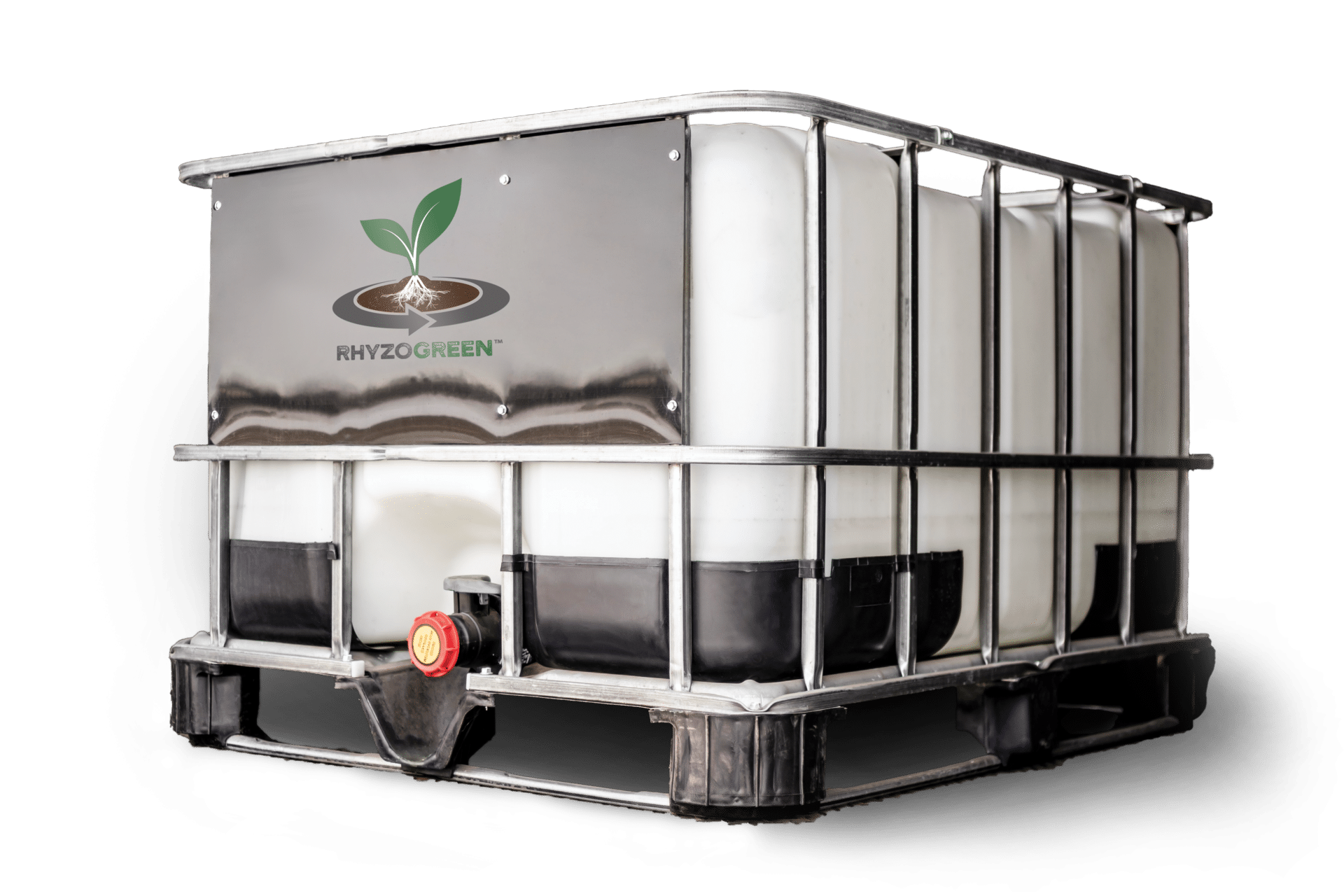
15% - 30% FORAGE SAVINGS
For example, let's say hay costs $230/ton (12¢/lb)
If you feed 30 lbs per day, and see 15% savings (conservatively)...
That’s 4.5 lbs saved. The net worth of saved hay is 54¢/hd/day
The average cost/head/day of Riomax® is 43¢
Then, take out what your mineral costs (±10¢)
43¢ - 54¢ - 10¢ = -21¢
In this scenario, you are MAKING 21¢/head/day by feeding Riomax®!